
AI in Health & Wellness: New Consumer Reality
Top 3 things you need to know
Skepticism shapes how Americans view AI in health & wellness
Overall sentiment is predominantly negative to mixed, with strong skepticism outweighing enthusiasm
Feelings Towards AI in Health & Wellness
Top 5 images selected by respondents

%

%

%

%

%
Consumers are receptive to AI in healthcare, but adoption hinges on trust, data privacy, and preserving meaningful human interaction
So what makes consumers cautious about AI in health & wellness?
Lack of trust & fear of harm
(concerns about inaccuracy, AI “hallucinations”, and potential misdiagnosis)
“AI is often wrong. I wouldn’t trust it with my health” – Gen X, Female
“I am worried about it being inaccurate.” – Gen Z, Female
Data privacy, surveillance & misuse
(concerns about how personal health data is collected, shared, sold, or exposed)
“Because I don’t really know if I can trust AI and I don’t know what they are doing with my data.” – Gen Z, Female
AI seen as dehumanizing healthcare
(concerns about losing empathy, human judgement, and individualized care)
“Health care should be based on the individual not an algorithm” – Gen X, Male
“I don’t want my healthcare in the hands of a robot, I would rather be cared for by a human with human thoughts and feelings.” – Gen Z, Female
Skeptical of generative AI, more open to analytical AI
(belief that generative AI is unreliable and should not make healthcare decisions)
“Generative AI is not always accurate because when it does not have an answer, it makes one up to satisfy users” – Gen Z, Female
Despite the ongoing hype, AI has yet to break through as a mainstream health tool
Current use of AI remains limited. And while interest in future use exists among some consumers, over a third say they are not interested—signaling a trust and value gap
AI for Health & Wellness: Current Usage and Future Outlook
%
Use AI in Health & Wellness
%
Interested in Using AI in the Future
%
Not Interested in Using AI in the Future
Consumers are divided on AI integration in health & wellness, as trust softens YoY
Perceptions of Integrations of AI and its Impact on Healthcare
Integration of AI in Healthcare
Negative (B2B)
%
Positive (T2B)

%
AI Users in Health & Wellness: 87%
⬆️ Significantly higher than AI Non-Users (41%)
Level of Trust in AI for Healthcare

Wouldn’t Trust (B2B)

%
Would Trust (T2B)

%
⬇️ Significantly lower than Past Wave-2024 (52%)
AI Users in Health & Wellness: 88%
⬆️ Significantly higher than AI Non-Users (38%)
However, despite broad skepticism, hands-on experience with AI changes perceptions—suggesting the trust gap is driven more by uncertainty than outright rejection
Consumers are likely to engage with AI when it supports—not replaces—them
Use-case analysis reveals consumers are more comfortable using AI for information-seeking than decision-making
TOP 5 AI applications
(Among current users of AI in health & wellness)
- Using a chatbot or virtual assistant for medical questions or symptom checking 55%
- Using AI to get personalized health or fitness recommendations 35%
- Using AI to interpret test results or lab data 27%
- Using AI to track or analyze my health data 23%
- Using AI for diet or nutrition planning 23%
Among those who are open to adopting AI in healthcare, interest spans practical use cases—from administrative and information support to care coordination and fitness support
AI Use-Cases of Broad Appeal – TOP 8 Shown
(Among those who are open to adopting AI in health & wellness i.e., are interested or unsure)
- Helps schedule medical appointments and sends reminders 50%
- Summarize or explain complex medical information 49%
- Helps understand insurance coverage 48%
- Detect or predict health issues early 45%
- Helps navigate healthcare system and coordinate care between multiple doctors or specialists 44%
- Analyzes medical imaging (X-rays, MRI, CT scans) to help diagnose patients 43%
- AI-powered apps for exercise and physical fitness 42%
- Recommends tests and screenings 42%
Consumers turn to AI in healthcare for speed, clarity, understanding, and personal empowerment
What is driving current use of AI in healthcare facet of life?

Speed & Immediacy
Getting answers faster than doctors or research portals
“AI offers a quick way to get immediate answers, unlike asking a doctor, which takes longer… With ChatGPT, I can have real-time conversations.” Gen Z, Male

For Clarity & Translation of Medical Information
Turning complex medical language into plan, understandable terms
“(I use it for) translating complex health information into plain English” Boomer, Female

Decision Support
Helping assess and prioritize symptoms and health risks that may need medical attention
AI helps me check on symptoms to decide if a hospital visit is necessary… AI guided me to seek hospital care” Gen X, Female

For Personalization & Planning Support
Providing customized guidance when people don’t know where to start e.g., creating routines (day-to-day/workouts/meals), sending reminders
“Creates a meal plan based on the nutrients and caloric intake I need” Gen Z, Female
“ (I’d like) reminders to get my blood work done… because I’m forgetful with my calendar” Gen X, Male

For Emotional Reassurance & Non-Judgmental Support
Offering calm, validation, and a safe space to ask questions
“Most of the time, AI’s are not judgmental and do not think I am overreacting about symptoms.” Boomer, Female

Reducing Access Burden, Cost & healthcare system gaps
Filling gaps when care is slow, expensive, or hard to access
It costs me $300 just to call my doctors. With AI, I get the same or better answers” Millennial, Female
“I don’t currently have a regular doctor because mine retired, so for now, AI is all I have” Gen X, Male
We leveraged Rival AI thoughtfulness scoring and Smart Probe functionality to follow-up on open ended responses, ultimately resulting in deeper, more thoughtful feedback
Powered by Rival Tech Platform
In Conclusion...
A word on our approach
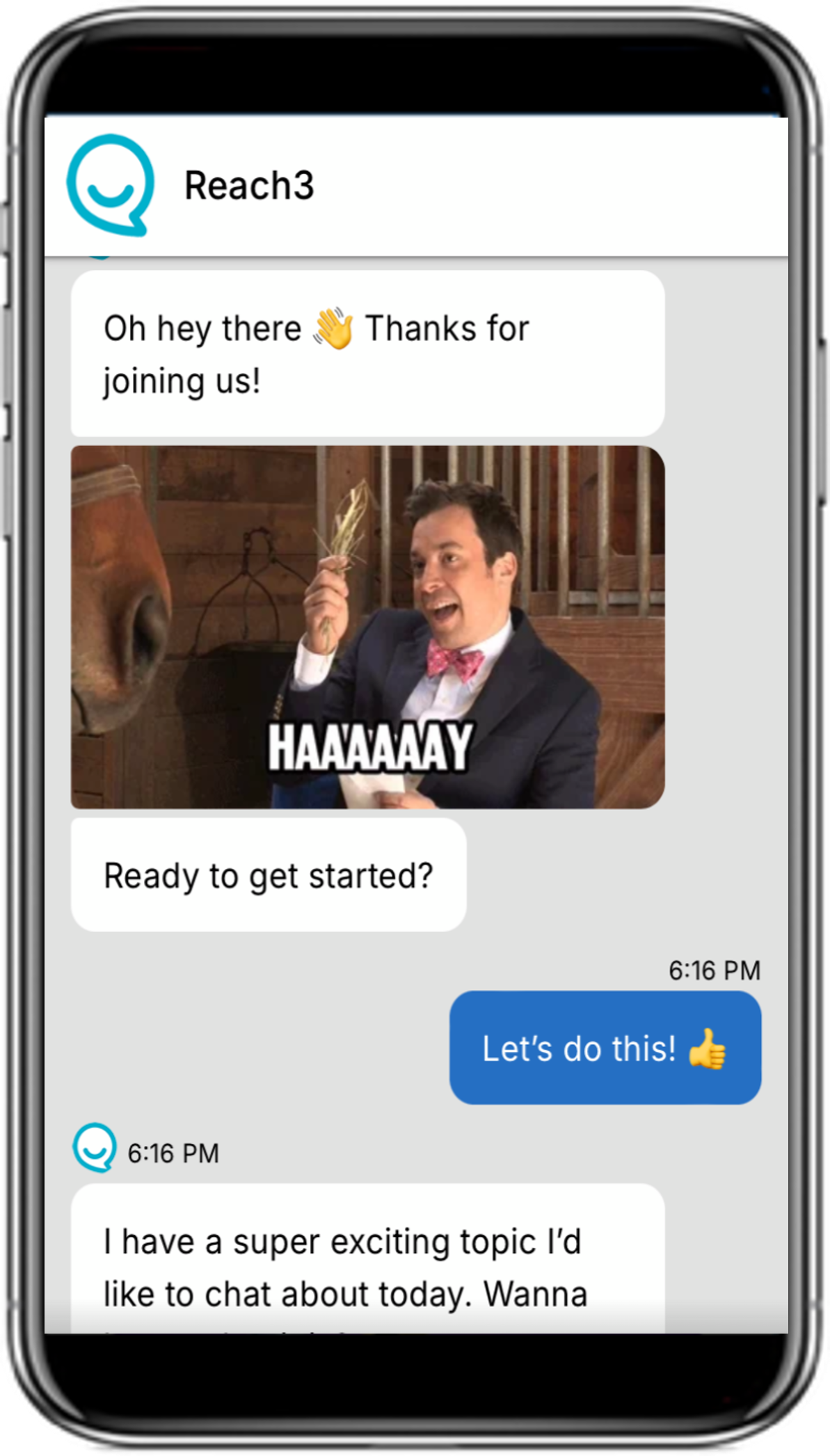
This study was conducted using our proprietary mobile-first, conversational based platform that allows for the capture robust quant data and emotive qualitative insights, all in one seamless experience. We’ve found that this approach facilitates greater disclosure on sensitive topics, and ultimately produces deeper, richer insights that can drive better business decisions.
This research was fielded in Dec 2025. We engaged with n=1043 Americans, aged 18+, nationally-representative. Previous Digital Health work referenced in this report was conducted in 2024.